
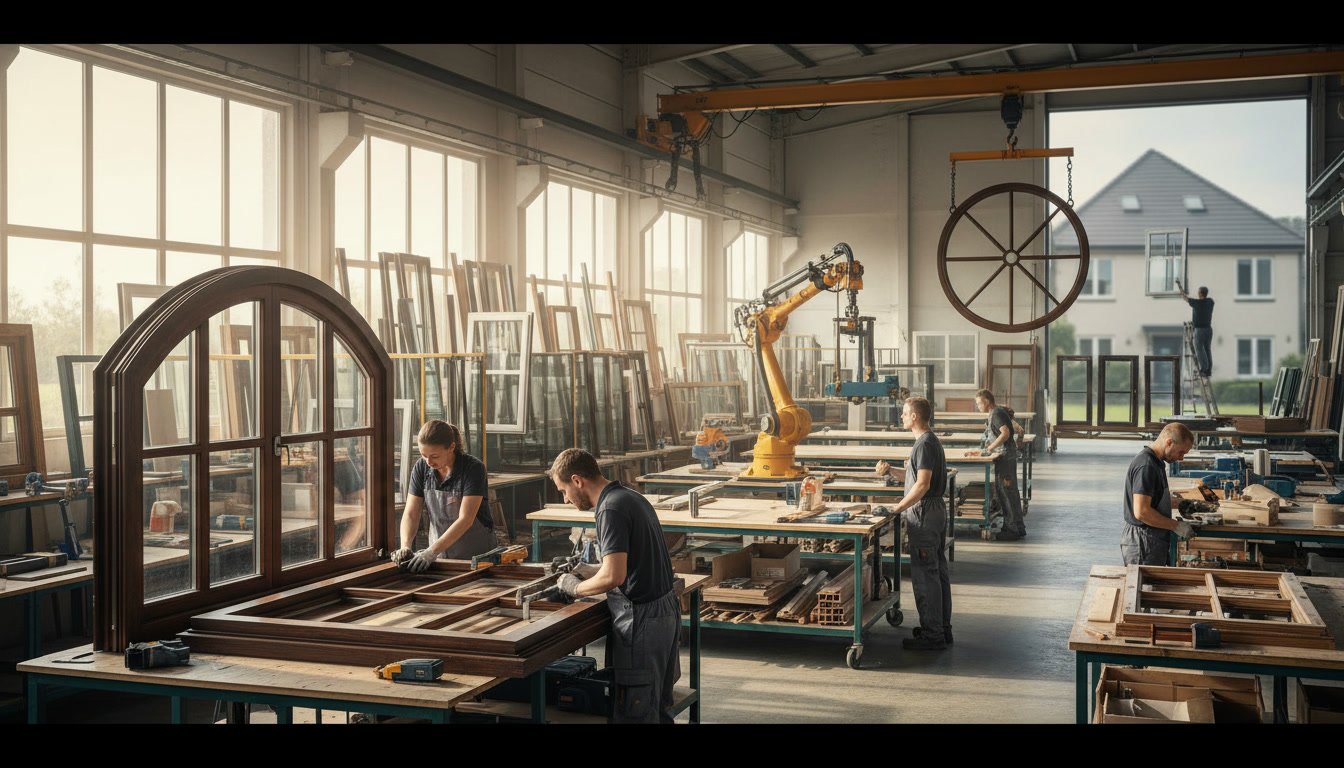
Custom window manufacturing creates windows built to your home’s exact opening dimensions, ensuring a precise fit without gaps or forced adjustments. Stock window replacement involves selecting from pre-made sizes and adapting the installation to make standard dimensions work in your openings. The manufacturing approach determines long-term performance, energy efficiency, and warranty coverage for decades to come.
Most homeowners don’t realize that the quality of their window installation begins long before installation day. The difference between a window that performs flawlessly for 30 years and one that develops drafts within five often comes down to whether the product was built for that specific opening or adapted from a standard size.
Why Window Openings Are Never Truly Standard
Building practices, settling foundations, and decades of repairs mean that even homes built from identical plans end up with unique window opening dimensions. A opening that measures 36 inches wide on one side might measure 35 and three-quarter inches on the other. The height can vary by a quarter inch from left to right.
These variations seem minor until you try to fit a stock window manufactured in half-inch increments. A 36-inch stock window in a 35.75-inch opening won’t fit. A 35.5-inch window in that same opening leaves a quarter-inch gap that installers must fill with shims and expanding foam. Neither solution provides the structural integrity or thermal performance of a window manufactured to the actual dimension.
Older homes present even greater challenges. Settling, moisture damage, and previous renovation work can create openings that are out of square by half an inch or more. Stock windows assume perfectly square, plumb, and level openings. Real-world openings rarely meet that standard.
The Measurement Process That Drives Manufacturing
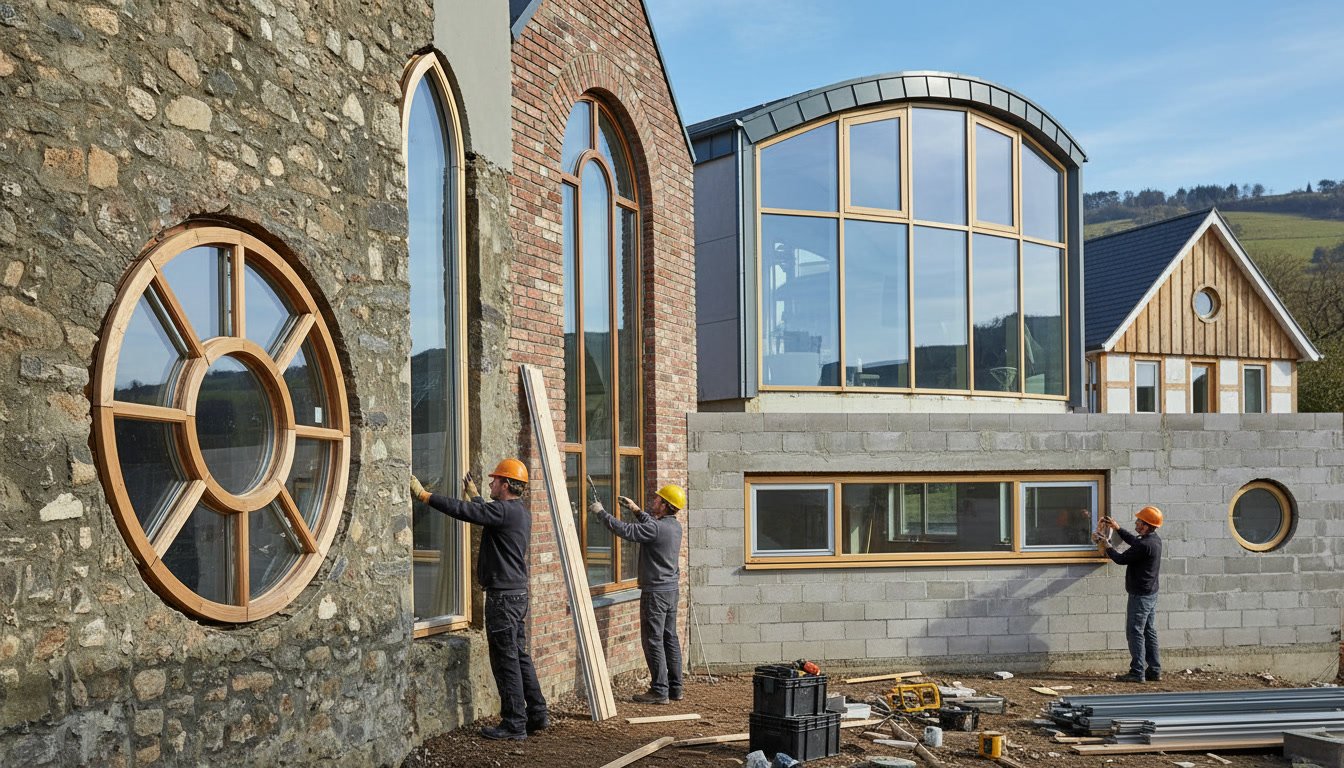
Professional measurement for custom manufacturing involves recording dimensions at multiple points across each opening. Width gets measured at the top, middle, and bottom. Height gets checked on both sides and in the center. Diagonal measurements confirm whether the opening is square.
These measurements get recorded to the nearest sixteenth of an inch, not rounded to the nearest half inch. The smallest dimension becomes the manufacturing specification, ensuring the finished window fits even if the opening is slightly out of square. This precision-first approach prevents the installation problems that plague stock window projects.
Depth measurements matter just as much as width and height. The distance from the interior stop to the exterior casing determines how the window sits in the opening and whether trim work will align properly. Stock windows come with standard depth profiles that may not match your wall thickness, especially in older construction.
Manufacturing Lead Time and the Production Difference
Stock windows sit in warehouses ready for immediate pickup. Custom manufactured windows require production time, typically two to four weeks from measurement approval to delivery. This wait reflects the fundamental difference in how the products are made.
A stock window starts as a standard frame size that the manufacturer produces by the thousands. Vinyl extrusions get cut to common dimensions, welded together, and fitted with standard glass units. The same 36 by 48 inch double-hung window goes to hundreds of homes regardless of their actual opening dimensions.
Custom manufacturing starts with your specific measurements. Frame components get cut to exact dimensions for that single window. Glass units get ordered in the precise size needed. Hardware placement gets calculated based on the actual sash dimensions, not standard locations. The result is a window engineered specifically for one opening in one home.
How Custom Manufacturing Affects Energy Performance in Annapolis Homes
Energy efficiency ratings printed on window labels assume proper installation in an opening that matches the window dimensions. When installers must shim and foam-fill gaps around stock windows, those ratings become theoretical rather than actual performance numbers.
Air infiltration happens at the gaps between the window frame and the rough opening. A custom manufactured window minimizes this gap to a uniform quarter inch around the perimeter. That consistent gap allows for proper insulation without compression or voids. Stock windows often create gaps ranging from an eighth inch to three-quarters of an inch depending on where the opening dimension falls relative to standard sizes.
The difference shows up in heating and cooling costs over time. A home with ten stock windows averaging half-inch gaps around the perimeter essentially has a four-inch hole in the building envelope. Energy-efficient window replacement only delivers rated performance when the installation matches the precision of the manufacturing.
Warranty Coverage and Why Manufacturing Method Matters
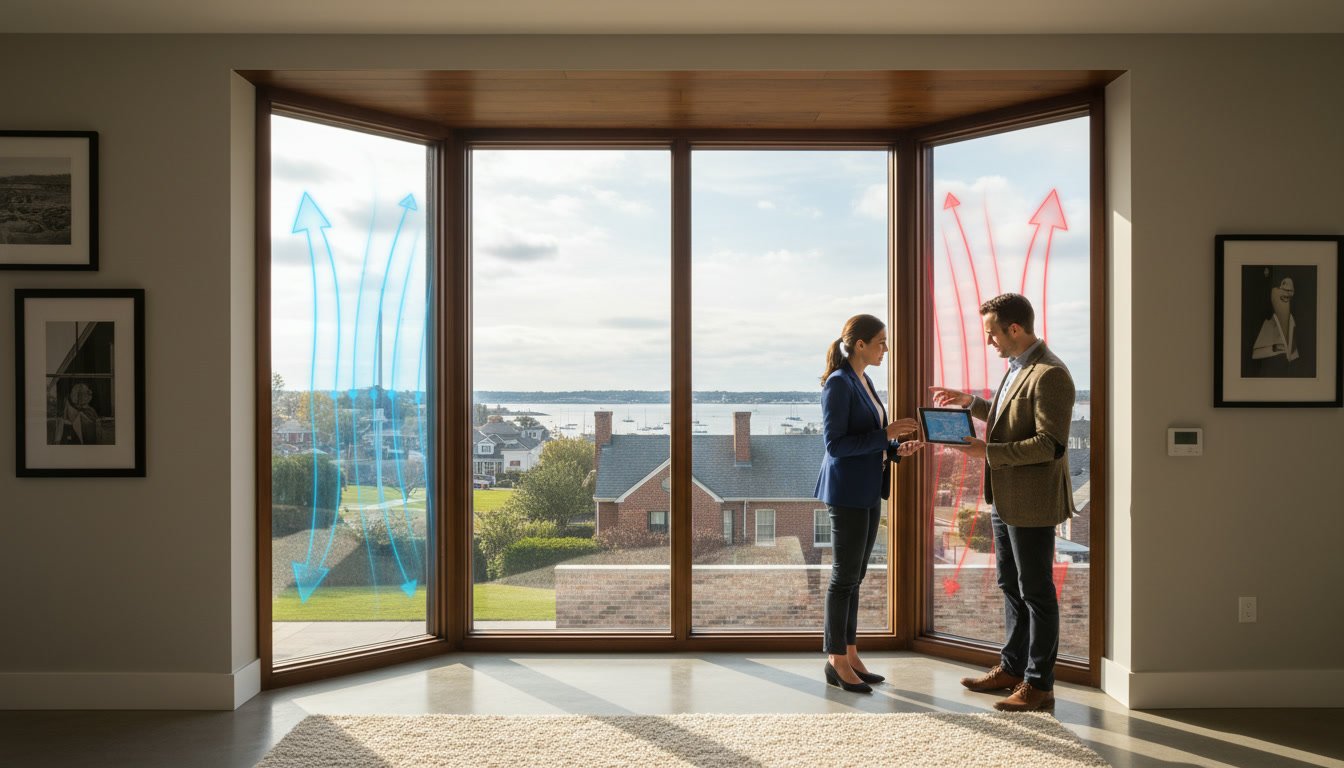
Window warranties typically cover manufacturing defects and sometimes installation workmanship. The critical question is whether gaps, air infiltration, and operational issues qualify as defects when they result from forcing stock sizes into non-standard openings.
Manufacturers of custom windows take responsibility for both the product and the fit because they controlled the measurement and manufacturing process. If a window leaks air around the frame, the manufacturer can’t claim the opening was the wrong size because they specified the dimensions. This accountability creates stronger warranty protection for homeowners.
Stock window warranties often include language about proper installation in suitable openings. When problems develop, determining whether the issue stems from the window itself or the size mismatch becomes a dispute between the installer and manufacturer. Homeowners end up in the middle of finger-pointing rather than getting the problem resolved.
Transferable lifetime warranties only make sense in the context of custom manufacturing. A window built to fit a specific opening adds documentable value to the home because the next owner gets the same precision fit and performance. Stock windows offer no such assurance because their fit quality depends entirely on how well the installer adapted standard sizes to that home’s unique openings.
Stock vs Custom: A Direct Comparison
Stock windows cost less upfront because manufacturers achieve economies of scale producing standard sizes. Custom windows carry higher initial costs due to individual production runs. The price difference typically ranges from 15 to 30 percent depending on the window type and size.
Installation time favors stock windows when the project involves simple size matching. Custom manufacturing requires professional measurement visits and production lead time. However, installation day often goes faster with custom windows because the precise fit eliminates time spent shimming, adjusting, and problem-solving poor fits.
Long-term performance heavily favors custom manufacturing. Properly fitted windows maintain their operational quality and energy performance for decades. Stock windows in mismatched openings tend to develop issues within five to ten years as settling and temperature cycles stress the improvised fit.
If you notice early signs of window failure, understanding when replacement makes more sense than repairs helps you plan the right solution from the start.
The Role of Factory Certification in Custom Work
Factory certification confirms that an installer has demonstrated proficiency in a manufacturer’s specific measurement and installation requirements. This certification matters more for custom work than stock installation because the margin for error is smaller.
A certified installer understands how to account for out-of-square openings in the measurement specifications. They know which dimension tolerances the factory can accommodate and which require opening modification before ordering. This expertise prevents the costly problem of custom windows that don’t fit because measurements didn’t account for real-world conditions.
Manufacturers provide direct warranty support to certified installers, eliminating the service delays that happen when distributors and middlemen get involved. When a homeowner contacts the manufacturer about a performance issue, the factory already has installation documentation from the certified installer and can diagnose problems quickly.

When Stock Windows Make Sense
New construction with standardized framing sometimes uses stock windows effectively. When builders frame openings to match common window sizes and ensure square, plumb, and level construction, stock products can perform adequately.
Budget-constrained projects where homeowners prioritize immediate cost savings over long-term performance may choose stock windows knowingly. The key is understanding the trade-offs rather than assuming stock and custom deliver equivalent results at different price points.
Rental properties with shorter investment horizons sometimes use stock windows to minimize capital expenditure. Owners planning to sell within a few years may not value the 20-year performance difference enough to justify custom manufacturing costs.
How the Full Replacement Process Differs
Custom manufacturing integrates measurement, production, and installation as a coordinated process. The measurement technician understands manufacturing capabilities and installation requirements, so dimensions get recorded with both in mind. The installer receives windows built to specifications they can verify against the original measurements.
Stock window projects separate these functions. A salesperson might measure, a warehouse pulls standard sizes, and an installer adapts whatever arrives to whatever opening exists. Each handoff creates opportunity for miscommunication and error.
Project timelines reflect this difference. Custom work requires upfront time for measurement and manufacturing but proceeds smoothly through installation. Stock projects start faster but often encounter delays when windows don’t fit properly and require returns, modifications, or creative solutions.
For homeowners considering whole-house window replacement, understanding the complete process helps set realistic expectations for timeline and results.
Material Options and Customization Depth
Stock windows typically offer limited material and configuration choices within each size. You might find three or four color options and standard hardware finishes. Grid patterns come in two or three common styles. Glass packages include basic clear, Low-E, and maybe one upgrade option.
Custom manufacturing opens the full specification range. Vinyl window replacement projects can specify custom colors, interior and exterior finish combinations, and hardware that matches existing home details. Grid patterns can match historical styles or create unique designs. Glass packages get tailored to specific sun exposure and climate control needs.
This customization matters most for specialty shapes. Bay and bow window replacement projects rarely work with stock products because projection depth, angle configurations, and roof styles vary significantly between homes. Custom manufacturing accommodates these variations as standard practice.
Making the Right Choice for Your Home
The decision between custom and stock comes down to your priorities for performance, longevity, and home value. Homes you plan to own for decades benefit most from custom manufacturing because the performance advantage compounds over time. The energy savings, reduced maintenance, and higher resale value eventually offset the initial cost premium.
Historic homes and properties with non-standard architecture require custom work regardless of cost considerations. Trying to fit stock windows into unique openings compromises both the installation quality and the home’s character. Custom manufacturing preserves architectural integrity while delivering modern performance.
The expertise of your installation team matters as much as the manufacturing approach. Even custom windows perform poorly if installers lack the skills to handle precision work. Factory certification provides assurance that the installation team can execute the level of detail that custom manufacturing requires.
Professional Installation Completes the Custom Advantage
Custom manufactured windows deliver their full potential only when installed by teams trained in precision techniques. The quarter-inch tolerances that define custom work require careful handling, exact positioning, and proper fastening schedules that stock window installers may not practice routinely.
Window Doctor combines exact measurement processes with custom manufactured products and factory certified installation to ensure every window performs as engineered. Our lifetime transferable warranty covers both the product and installation because we control every step from initial measurement through final inspection.
If you’re ready to explore how custom manufactured windows can improve your home’s performance and value, contact our team at (410) 988-3669 to schedule a no-obligation measurement consultation. We’ll assess your specific openings, explain your options, and provide detailed specifications for windows built precisely for your home.